dakshinakali.org


Dhyana Is Not Exclusive Practice
Why Puja, Japa, and Dhyana are not independent of each other
1/15/20253 min read
Dhyana : Steps, Psychology, and Science
Om Kali,
Indian spiritual traditions describe two foundational forms of meditation: Saguna (with form) and Nirguna (beyond form), representing unique stages in the journey from devotional worship to direct realization of the Absolute¹. Tantra guides this journey through three core stages—Puja (ritual worship), Japa (mantra repetition), and Dhyana (meditation)—each refining body, speech, and mind in an ordered progression².
Combining Meditation Types with Tantric Rituals
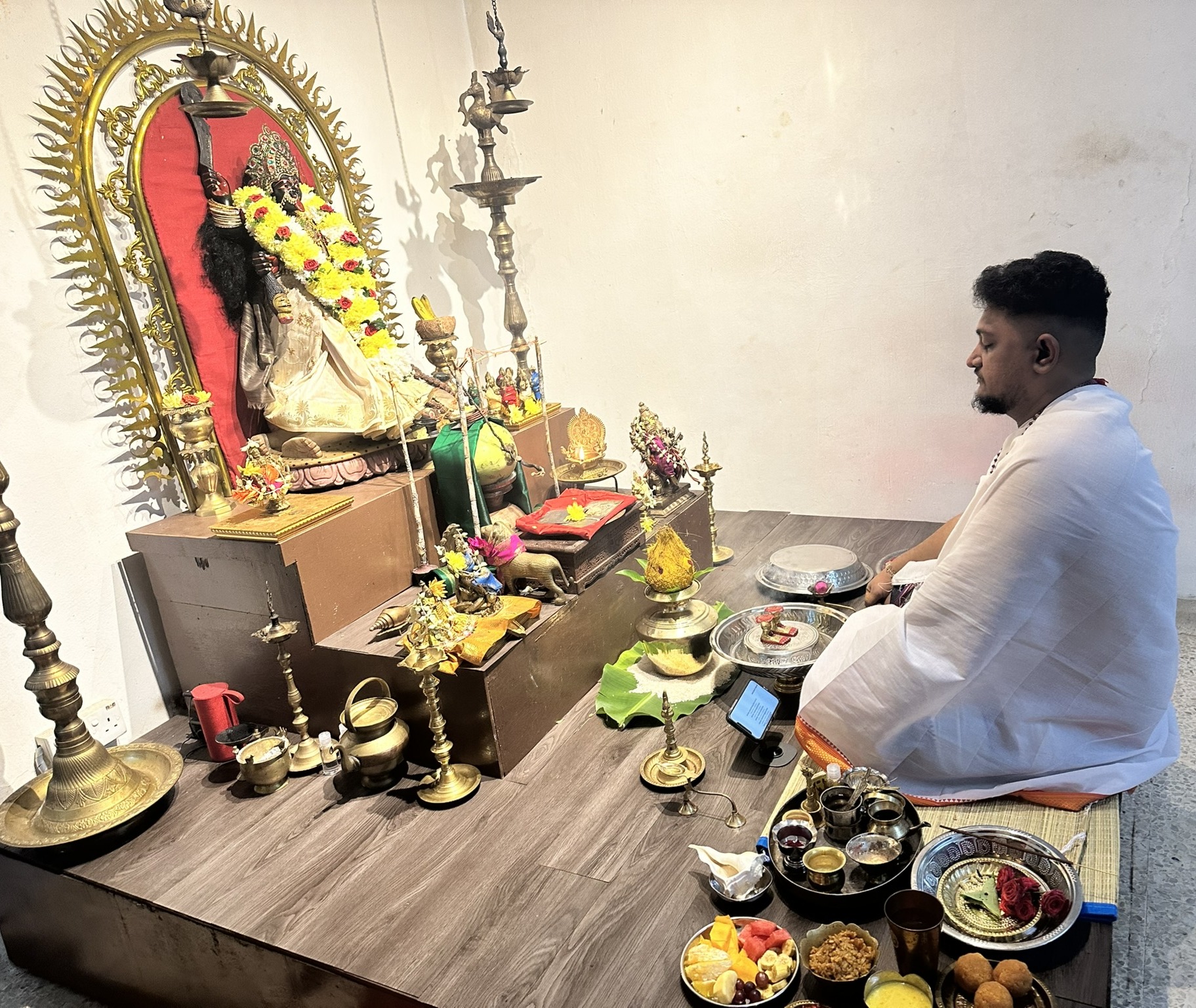
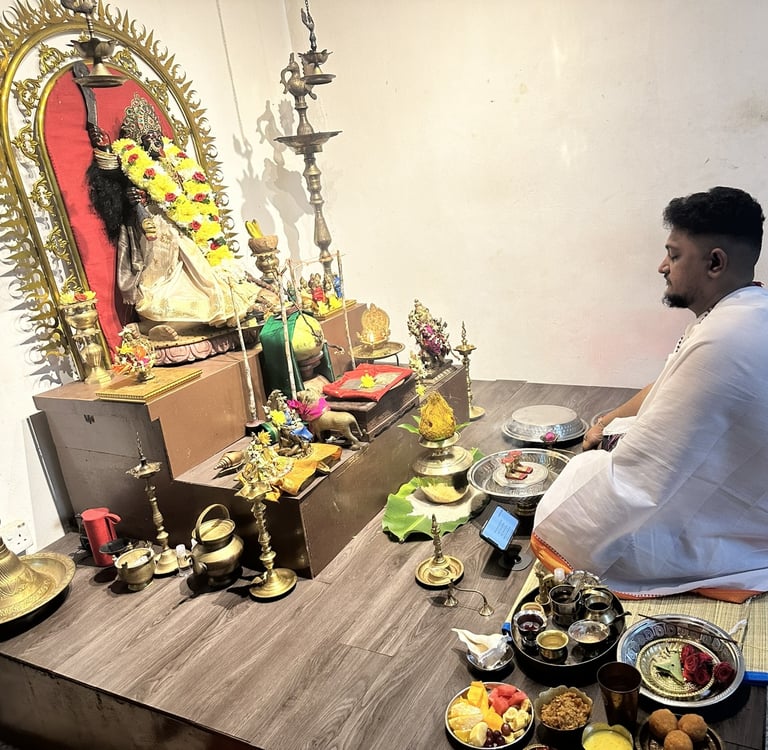
Meditative practice begins with Puja, the ritual act of sanctifying one's environment and awakening reverence for the divine presence¹. Japa follows as the rhythmic chanting of a mantra, commonly with prayer beads, sharpening the mind and internalizing devotion². This foundation enables Dhyana, wherein the practitioner absorbs the mind into the deity (Saguna) or dissolves into formless awareness (Nirguna)¹. Tantric manuals stress that skipping these essential rituals causes restlessness and reduces the benefits of meditation³. Srinivasan adds that individuals who neglect puja and japa often experience emotional turbulence rather than deep peace during meditation⁴.
Meditation with Form (Saguna Brahman) and Beyond (Nirguna Brahman)
These practices direct consciousness toward tangible or conceptual objects to cultivate devotion and concentration:
Pratika-pratimadhyana (Meditation on Objects): By fixing the mind on agreeable objects—such as sacred images or symbols—the practitioner attains calmness and balance, as described by Patanjali¹.
Sukshmadhyana (Meditation on Subtle Truths): Through focused study of scriptural truths, desire is overcome and the path to self-realization is illuminated, as taught by Vasistha¹.
Vyakti-upasanadhyana (Meditation on God with Form): Meditation upon divinity possessing qualities renders worship more accessible and facilitates deeper concentration, following the views of Sivananda¹.
Lila-dhyana (Meditation on the Avatar’s Divine Play): Contemplating the divine play of avatars like Krishna or Rama invites the mind into joyful participation in cosmic drama, echoing the teachings of Ramakrishna¹.
These more advanced types transcend form, guiding the mind into subtler states:
Tailadharadhyana (Meditation on One-pointedness): Single-pointed concentration likened to an unbroken oil stream leads to profound inner absorption, as Swami Vivekananda notes¹.
Svarupadhyana (Meditation on the Inner Self): Meditating on one's own self rather than external forms offers refuge and mastery, in line with Buddha’s teachings¹.
Brahmakaravrittidhyana (Meditation on Brahman): This involves intense quietude and unity with Brahman, as instructed by Shankaracharya¹.
Layachintayadhyana (Meditation to Achieve Immersion): Culminating in total absorption where the world of appearances vanishes, “when the mind is completely absorbed in the Supreme Being—Brahman,” again referencing Shankaracharya¹.
How Mantra Chanting Enhances Meditation
Scientific studies now show that mantra chanting calms wandering thoughts, increases focus, and promotes relaxation by enhancing alpha and theta brainwaves⁵. Mantra japa in Tantra is not merely a psychological exercise; it is believed to awaken subtle states of consciousness and harmonize the nervous system with spiritual energy⁶. Many practitioners report that mantra-based practices make entering meditation easier and foster resilience to daily stress⁷.
Psychological Effects of Puja and Japa
Puja provides emotional grounding and comfort through multi-sensory ritual—fragrance, sound, and touch—which channels emotions toward the sacred². Japa’s repetitive cadence retrains thoughts, curbs distraction, and strengthens discipline, a benefit affirmed by neuroscience studies on mantric repetition⁵. Over time, these practices balance the mind, setting the stage for deep meditative absorption⁷.
Research on Sequential Spiritual Progression
Tantric and Yogic writings emphasize the sequence Puja to Japa then to Dhyana as essential to ethical, emotional, and mental readiness, closely paralleling Patanjali’s Ashtanga Yoga system³. Modern research affirms that skipping foundational steps may result in spiritual instability, while respecting the sequence nurtures integrated transformation⁴. Sincere practice brings enduring calm, turning ritual into meditation, devotion into wisdom, and meditation into lasting realization³.
Jai Kali!
Notes
Chart by Babaji Bob Kindler, Two Forms & Eight Main Types of Meditation.
Chamunda Swami Ji, The Four Stages of Sadhana in Tantra (2020).
Pandey, P. (2024). The Vedic Tantra of Great Liberation. SSRN.
Srinivasan, T. M. (2013). “From Meditation to Dhyana.” International Journal of Yoga, 6(1), 1–3.
Perry, G. (2022). “How Chanting Relates to Cognitive Function, Altered States…” PubMed Central.
Dutta, A. (2025). Mantras and the Mind: The Neuroscience of Sacred Sound.
The Transformational Power of Mantra, Himalaya Yoga Institute (2016).
JOIN US
If you have any questions please feel free to contact us by calling +60122947313. All information you send through this site is kept confidential.
Please rest assured that only authorized personnel has access to information sent.
Follow US
Connect WITH US
swamiji@dakshinakali.org
+6012 294 7313
© 2025. All rights reserved.
contact US