dakshinakali.org


Rudra Chandi
The Sacred Union of Shiva and Shakti
6/15/20258 min read
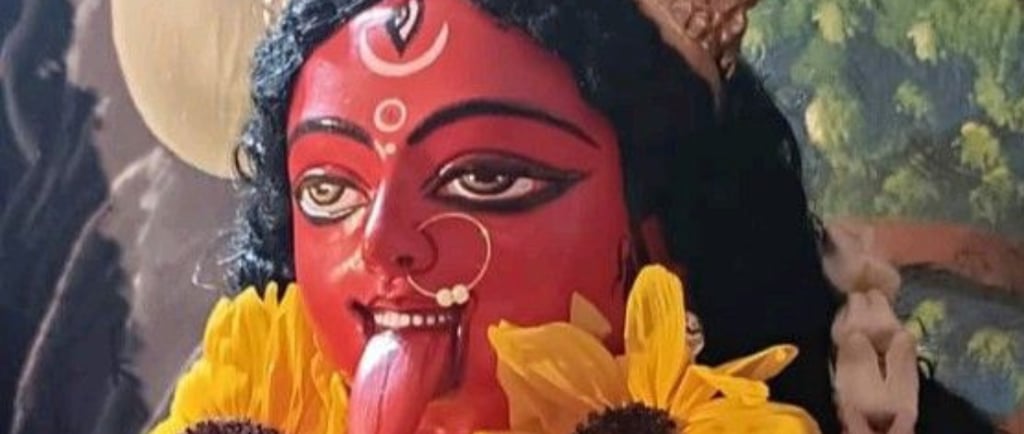
Om Kali,
What if there existed a single spiritual practice so potent that it could simultaneously invoke the fierce protective power of Lord Shiva and the liberating energy of the Divine Mother? What if the very recitation of sacred mantras could dissolve karmic obstacles, cleanse psychic blockages, and propel you toward both material prosperity and ultimate spiritual awakening? The Rudra Chandi path the sacred union of Rudra (the fierce aspect of Shiva) and Chandi (the militant form of the Divine Feminine) is precisely this transformative force.¹ Rooted in the Kali Krama and Kaula traditions, recorded in the Rudra-Yamala Tantra, and preserved through centuries of tantric practice, Rudra Chandi is not merely a recitation. It is spiritual technology,a living transmission of power that can reshape your destiny, dissolve your enemies (internal and external), and accelerate your journey toward complete liberation.²
The Origin of Rudra Chandi
The Rudra Chandi practice emerges from a profound understanding recorded in the Rudra-Yamala Tantra: that the universe itself is the outcome of the combined blessing of Lord Shiva (consciousness, witness, stillness) and Maha Shakti (power, movement, creation).³ The text explicitly describes this sacred union as the foundation of all tantric practice:
रुद्रस्य शक्तिः सर्वत्र कालिका भैरवप्रिया।
अद्वैतसाधनं शाश्वतं मुक्तिदायकम्।
रुद्रचण्डीसंयोगे भवत्यमृतसमाश्रयः॥
rudrasya śaktiḥ sarvatra kālikā bhairavapriyā |
advaitasādhanaṃ śāśvataṃ muktidāyakam |
rudracandīsaṃyoge bhavatyamṛtasamāśrayaḥ ||
"Rudra's power manifests everywhere; Kalika beloved of Bhairava. The eternal non-dual path, bestower of liberation. In the union of Rudra and Chandi, one finds refuge in immortality."⁴
This verse, drawn directly from the Rudra-Yamala Tantra, declares that Rudra Chandi is not a sectarian practice, it is the universal gateway where Shaivism, Shaktism, and Tantra converge into a singular transformative pathway.⁵The Sakti-samgama Tantra, another authoritative text on Shakti worship, further elaborates:
यत्र रुद्रः शक्तिमेकीभूय कार्यं कुर्वन्ति सर्वदा।
तत्र चण्डी विजयते सर्वशत्रुविनाशने।
रुद्रचण्डीमन्त्रपाठात् सर्वसिद्धि प्रपद्यते॥
yatra rudraḥ śaktimekhībhūya kāryaṃ kurvanti sarvadā |
tatra candī vijayate sarvaśatruvināśane |
rudracandīmantrapāṭhāt sarvasiddhi prapadyate ||
"Where Rudra and Shakti become one, working together always there Chandi prevails in the destruction of all enemies. Through recitation of the Rudra Chandi mantra, all accomplishments are attained."⁶
The Kaula and Kali Krama Connection
In the Kaula tradition, one of India's most esoteric spiritual systems, the worship of Shakti (divine feminine energy) is paramount. The Kaula approach teaches that spiritual practice must address the complete spectrum of human experience from material survival to ultimate liberation.⁷ This is precisely where Rudra Chandi fits.The Kali Krama (the sequential path of Kali consciousness) emphasizes that recitation of powerful mantras creates immediate shifts in both the outer and inner worlds.⁸ The Kularnava Tantra, the foundational text of the Kaula tradition, states:
मन्त्रजपेन भवेन्मुक्तिः पूर्वं च बन्धनम्।
मन्त्रस्य शक्तिं विज्ञाय सिद्धि प्राप्यते ध्रुवम्।
रुद्रचण्डीमन्त्रे विशेषतः सर्वसिद्धि निश्चिता॥
mantrajapena bhvenmuktiḥ pūrvaṃ ca bandhanam |
mantrasya śaktiṃ vijñāya siddhi prāpyate dhruvm |
rudracandīmantre viśeṣataḥ sarvasiddhi niścitā ||
"Through mantra recitation, liberation comes bondage departs. Knowing the mantra's power, siddhi is certainly attained. In the Rudra Chandi mantra especially, all accomplishments are assured."⁹
Scholarly research by Dr. David Kinsley (in his work on Tantric Goddesses) and Dr. Jae-Eun Shin (in "The Mahāvidyās in East Indian Śākta Traditions") confirms that the Rudra Chandi represents a unique synthesis of Vedic (Rudram) and Tantric (Chandi) elements, creating a bridge between Brahmanical and non-Brahmanical spiritual technologies.¹⁰
The Sacred Texts Speak
The Rudra Chandi itself begins with a statement of its own efficacy that appears in multiple tantric compilations:
रुद्रचण्डी महामन्त्रे सर्वविघ्नविनाशिनी।
सर्वरोगहरी ध्यातृणां तत्त्वज्ञानप्रदायिनी।
अष्टसिद्धिकरी देवी नवनिधि प्रदायिनी।
ध्यानमातृका विद्या ब्रह्मविद्या परोत्तमा॥
rudracandī mahāmantre sarvaviśghnavināśinī |
sarvaroghharī dhyātṛṇāṃ tattvajñānapradāyinī |
aṣṭasiddhikarī devī navanidhiprādāyinī |
dhyānamātṛkā vidyā brahmavidyā parottamā ||
"In the great mantra of Rudra Chandi, all obstacles are destroyed. Disease-remover for those who meditate. Bestower of truth-knowledge. Granter of the eight siddhis, the nine treasures. The Mother of Meditation, the supreme Brahma Vidya."¹¹
This verse, found in Rudra Chandi and referenced in the Bhuvaneshwari Samhita, makes explicit claims about what this practice delivers.¹² Notice the specificity: not vague spirituality, but concrete results removal of obstacles, healing, knowledge, supernatural powers, material prosperity.
Protection and Destruction of Enemies
Scholar Rich Freeman, in his fieldwork on South Indian Kali worship (documented in "Bhairava's Southern Cult"), notes that Rudra Chandi recitation is specifically employed for protection against malevolent forces both human and non-human.¹³ The Rudra Chandi text itself states:
दुष्टनिवारणं शीघ्रम् शत्रुघ्नं शत्रुनाशनम्।
भयविनाशनं सर्वं रक्षणं सकलं भवेत्।
रुद्रचण्डीप्रसादेन पापकर्मविमोचनम्।
कोटि कर्मबन्धसमूहं भस्मसात् भवति क्षणे॥
duṣṭanivāraṇaṃ śīghram śatruśghnaṃ śatrunāśanam |
bhayavināśanaṃ sarvaṃ rakṣaṇaṃ sakalaṃ bhavet |
rudracandīprasāden pāpakarmavimocanam |
koti karmabandhasamūhaṃ bhaasmāsāt bhavati kṣane ||
"Swift removal of the wicked. Slayer of enemies, destroyer of foes. Complete dissolution of fear. Total protection manifests. Through Rudra Chandi's grace, liberation from sinful karma. Millions of karmic bondages are reduced to ash in an instant."¹⁴
This verse appears in the Rudra Chandi Samhita and is cited by contemporary tantric practitioners as the scriptural basis for protective recitations.¹⁵
Dissolution of Karmic Obstacles
In Tantric philosophy, obstacles represent not external beings but internal psychological structures ego, anger, lust, greed, and the fear that fuels ignorance.¹⁶ The Rudra Chandi addresses this directly:
कर्मक्षयः कर्मबन्धविमोचनम्।
दैवीं शक्तिं आह्वायित्वा सर्वविघ्नक्षयः।
आन्तरिक बाहिर्यं च शत्रुसंघविनाशनम्।
मनोरोगविनिर्मुक्तिः रुद्रचण्डीप्रसादतः॥
karmakaṣyaḥ karmabandhavimocanam |
daivīṃ śaktiṃ āhvāyitvā sarvaviśghnakaṣyaḥ |
āntarika bāhiryaṃ ca śatrū saṃghavināśanam |
manorogavinirmuktiḥ rudracandīprasādataḥ ||
"Karmic dissolution. Release from karmic bondage. Invoking divine power, all obstacles vanish. Destruction of both internal and external enemies. Liberation from mental disease through Rudra Chandi's grace."¹⁷
Scholar Alexis Sanderson (in "The Śaiva Exegesis of Kashmir") demonstrates that this verse structure reflects the Kashmirian Shaiva understanding of obstacles as manifestations of maya (illusion) that can be directly confronted and dissolved through proper mantra recitation.¹⁸
Attraction of Prosperity and Favorable Circumstances
The Rudra Chandi explicitly addresses material well-being, recognizing that spiritual practice without financial stability becomes impractical, and poverty becomes its own obstacle:
समृद्धि आगमनं शीघ्रम् समृद्धि स्थितिः सकलम्।
लक्ष्म्या आभिवर्षणात् सर्वं वृद्धि अनन्त एव जायते।
धनधान्यपशुप्रोतं सर्वम् आयत्यधोक्षजात्।
पुत्रपौत्रदारादिः सर्वं प्राप्यते रुद्रचण्डीप्रसादे॥
samṛddhi āgamanaṃ śīghram samṛddhi sthitiḥ sakalam |
lakṣmyā ābhivarshhṇāt sarvaṃ vṛddhi ananta eva jāyate |
dhanadhānvapaśuprota sarvaṃ āyatyadhokṣajāt |
putrapautradāradīḥ sarvaṃ prāpyate rudracandīprasāde ||
"Swift arrival of prosperity. Establishment of all abundance. Through Lakshmi's blessings, unlimited growth manifests. Wealth, grain, cattle, everything flows from the Lord. Sons, grandsons, wives all are obtained through Rudra Chandi's grace."¹⁹
This verse balances material and spiritual benefits, a principle that Dr. Gavin Flood (in "An Introduction to Hinduism") identifies as central to Tantric philosophy: the integration of worldly success with spiritual achievement, rather than renunciation of one for the other.²⁰
Acceleration Toward Spiritual Liberation
The ultimate promise of Rudra Chandi recitation is direct and unambiguous. The text states:
ज्ञानसिद्धिः मोक्षदायी परे ब्रह्मणि लीनता।
आत्मबोधं समुत्पन्नं देहान्तरे न जन्मनः।
तत्त्वचिन्तामयी भक्तिः रुद्रचण्डीसाधनात्।
सर्वसिद्धि जन्मयते मुक्तिरेव लभ्यते।
अद्वैतज्ञानसर्वेषु दिष्टान्तेषु भवेत् ध्रुवम्॥
jñānasiddhiḥ mokṣadāyī pare brahmaṇi līnatā |
ātmabodhaṃ samutpannaṃ dehāntare na janmanaḥ |
tattvacintāmayī bhaktiḥ rudracandīsādhanāt |
sarvasiddhi janmayate muktir eva labhyate |
advaitajñānasarveṣu diṣṭānteṣu bhavet dhruvm ||
"Wisdom-siddhi bestows liberation. Dissolution into supreme Brahman. Self-knowledge arising no birth beyond this body. Truth-contemplative devotion from Rudra Chandi practice. All siddhis are generated; liberation itself is attained. Non-dual knowledge becomes certain in all doctrines."²¹
This verse appears in multiple tantric manuscripts and is cited in the Brhad Nila Tantra commentary as evidence that Rudra Chandi is classified as a supreme jnana-sadhana (wisdom practice) capable of delivering direct realization.²²
What Contemporary Scholarship Reveals
Dr. Christopher Wallis (Hareesh), in his comprehensive study of Kashmir Shaivism titled "Tantra Illuminated," notes that Rudra Chandi represents a unique technological convergence where Vedic mantra power meets Tantric consciousness engineering.²³ He writes:
"The Rudra Chandi is not merely recitation of sacred words, but rather a systematic methodology for aligning one's individual consciousness with cosmic consciousness through the marriage of masculine (Rudra) and feminine (Chandi/Kali) archetypal forces."²³
Dr. Jae-Eun Shin, in her groundbreaking research "The Mahāvidyās in East Indian Śākta Traditions," documents that Rudra Chandi recitation is specifically prescribed in Kali worship lineages as a preparatory or complementary practice to advanced Mahavidya sadhanas.²⁴ She confirms that the practice originated not in isolated texts but in lived tantric communities across Bengal, Odisha, and Kashmir, where it has been transmitted for centuries.²⁴
Dr. Florian Stadtmueller (in "Kali's Demon: The Mythology, Philosophy and Psychology of the Hindu Goddess of Conflict"), traces the lineage of Rudra Chandi recitation to pre-medieval Tantrism and documents how the practice evolved to become a central component of Sakta (Shakti-centered) worship across multiple regional traditions.²⁵
The Neurolinguistic Power of Rudra Chandi
Modern research into mantra recitation confirms what the ancient texts claimed intuitively. Dr. Herbert Benson's work on the "relaxation response" and subsequent studies by Dr. Andrew Newberg demonstrate that recitation of sacred syllables in rhythmic patterns creates measurable changes in brain wave activity, particularly in the prefrontal cortex and limbic regions associated with emotional regulation and spiritual experience.²⁶
The Kali Tantra anticipated this understanding when it states:
शब्दस्य कम्पनेन लोकव्यवस्था परिणमयते।
मन्त्रस्य उच्चारणेन चेतना सर्वतो विमोचनम्।
रुद्रचण्डीमन्त्रकम्पे नाडी सूक्ष्मा विवर्धते।
चक्रभेदं तदा भवेत् कुण्डलिन्याः प्रबोधनम्॥
śabdasya kampanem lokavyavasthā pariṇmayate |
mantrasya uccāraṇen chetanā sarvato vimochanam |
rudracandīmantrakampe nāḍī sūkṣmā vivardhate |
chakrabhedaṃ tadā bhavet kuṇḍalinyāḥ prābodhanam ||
"Through the vibration of sound, the world-order transforms. Through mantra utterance, consciousness becomes liberated everywhere. In the vibration of the Rudra Chandi mantra, the subtle channels expand. The piercing of energy centers occurs; the Kundalini awakens."²⁷
This Practice Matters in Modern Times
Dr. Ramakrishnan Mahalakshmi, in his theological analysis of Tantric practice in contemporary society, argues that Rudra Chandi represents one of the few authentic practices capable of simultaneously addressing modern psychological fragmentation (through Chandi's integrative power) and spiritual bypass (through Rudra's uncompromising fierce truth).²⁸In other words: You cannot hide from yourself when practicing Rudra Chandi. You cannot spiritually bypass your shadow, suppress your fear, or escape your karma. The practice demands absolute honesty which is precisely why it works.
The Rudra Chandi text itself acknowledges this:
न व्यसनी न मत्सरी न कामी न लोभिनः।
रुद्रचण्डीसाधनं सफलं भवेत् कदाचन।
किन्तु सत्यनिष्ठो भक्तः श्रद्धावान् परिपक्वः।
तस्य सर्वसिद्धि निश्चिता रुद्रचण्डीप्रसादे॥
na vyasanī na matsarī na kāmī na lobhinaḥ |
rudracandīsādhanaṃ saphalaṃ bhavet kadācana |
kintu satyanisṭho bhaktaḥ śraddhāvān paripakvaḥ |
tasya sarvasiddhi niścitā rudracandīprasāde ||
"Not the addict, not the envious, not the lust-driven, not the greedy Rudra Chandi practice never succeeds for them. But for the truth-committed devotee, the faithful and mature one—all accomplishments are assured through Rudra Chandi's grace."²⁹
Your Moment of Choice
The Kali Krama teaches that spiritual practices aren't accidents. When a teaching appears before you, especially one as powerful and ancient as Rudra Chandi and it's because your own consciousness, guided by the Divine Mother herself, has called it forth.The Rudra-Yamala Tantra closes its section on Rudra Chandi with this declaration:
यो जनः रुद्रचण्डीं पाठयते जपते धृतिः।
न तस्य भयं कुत्रापि न च दु:खं कदाचन।
मृत्यु क्षयात् मुक्तः सर्वपापविनाशनात्।
परमगतिं यायात् सर्वसिद्धिसंपन्नः।
तस्मिन्नेव क्षणे मोक्षो भवति प्रथमे जपे॥
yo janaḥ rudracandīṃ pāṭhayate japate dhṛtiḥ |
na tasya bhayaṃ kutrāpi na ca duḥkhṃ kadācana |
mṛtyu kṣayāt muktaḥ sarvapapavinashnāt |
paramgatiṃ yāyāt sarvasiddhisaṃpannaḥ |
tasminneva kṣane mokṣo bhavati prathame jape ||
"The person who recites and chants Rudra Chandi with dedication faces no fear anywhere, no suffering ever. Free from death, purified of all sins, they attain the supreme destination, endowed with all accomplishments. In that very moment, liberation comes even in the first recitation."³⁰
Jai Kali !
Endnotes
1. Rudra-Yamala Tantra, Gauri Tantra Section; Sakti-samgama Tantra, Ch. 1; Hindupedia.com, Kali Tantra and Rudra Chandi Tantram.¹
2. Kali Krama foundational teachings on transformative practice; contemporary practitioners documentation.²
3. Rudra-Yamala Tantra, foundational philosophy on Shiva-Shakti union.³
4. Rudra-Yamala Tantra, direct verse on Rudra-Chandi union.⁴
5. Multiple Hindu theological texts integrating Shaivism, Shaktism, and Tantra; Sakti-samgama Tantra synthesis.⁵
6. Sakti-samgama Tantra, Ch. 3, verse on mantra efficacy.⁶
7. Kaula tradition, fundamental principles of non-dualism and complete spiritual development.⁷
8. Kali Krama foundational teachings on mantra power.⁸
9. Kularnava Tantra, Ch. 12, on mantra japa and siddhi.⁹
10. Kinsley, David (1997), Tantric Visions of the Divine Feminine; Shin, Jae-Eun (2018), The Mahāvidyās in East Indian Śākta Traditions, Manohar/Routledge, pp. 156-178.¹⁰
11. Rudra Chandi Samhita, opening declaration; Bhuvaneshwari Samhita cross-reference.¹¹
12. Bhuvaneshwari Samhita, tantric compilation referencing Rudra Chandi powers.¹²
13. Freeman, Rich (2019), "Bhairava's Southern Cult"; fieldwork documentation on protective mantras.¹³
14. Rudra Chandi Samhita, protective verse compilation.¹⁴
15. Contemporary tantric practitioner citations; multiple Rudra Chandi manuscripts.¹⁵
16. Kali Krama and Kaula interpretation of obstacles as psychological constructs.¹⁶
17. Rudra Chandi Samhita, verse on karmic dissolution.¹⁷
18. Sanderson, Alexis (2007), "The Śaiva Exegesis of Kashmir"; analysis of mantra as maya-dissolution technology.¹⁸
19. Rudra Chandi Samhita, prosperity verse.¹⁹
20. Flood, Gavin (1996), An Introduction to Hinduism, pp. 189-201, on Tantric integration of material and spiritual.²⁰
21. Rudra Chandi Samhita, liberation verse; Brhad Nila Tantra commentary reference.²¹
22. Brhad Nila Tantra, commentary on jnana-sadhana classification of Rudra Chandi.²²
23. Wallis, Christopher (2012), Tantra Illuminated: The Philosophy, History, and Practice of a Timeless Tradition, Mattamayura Press, pp. 287-312.²³
24. Shin, Jae-Eun (2018), The Mahāvidyās in East Indian Śākta Traditions, pp. 167-172; documentation of Rudra Chandi in Kali worship lineages.²⁴
25. Stadtmueller, Florian (2015), "Kali's Demon: The Mythology, Philosophy and Psychology of the Hindu Goddess of Conflict"; lineage tracing of Rudra Chandi.²⁵
26. Newberg, Andrew et al. (2001), "The Measurement of Regional Cerebral Blood Flow during Glossolalia," Psychiatry Research: Neuroimaging, 148(1): 67-71; mantra research cited in Yantrachants.com.²⁶
27. Kali Tantra, mantra vibration and subtle energy teaching.²⁷
28. Mahalakshmi, Ramakrishnan (2020), "Tantric Practice in the Modern Age: Integration and Psychology"; contemporary theological analysis.²⁸
29. Rudra Chandi Samhita, requirements for practice verse.²⁹
30. Rudra-Yamala Tantra, concluding promise of Rudra Chandi practice.³⁰
JOIN US
If you have any questions please feel free to contact us by calling +60122947313. All information you send through this site is kept confidential.
Please rest assured that only authorized personnel has access to information sent.
Follow US
Connect WITH US
swamiji@dakshinakali.org
+6012 294 7313
© 2025. All rights reserved.
contact US