dakshinakali.org


Sri Dakshina Kali Satanama Stotram
Neuroscience on Hymn of the Nectar of All Perfections
11/5/20256 min read
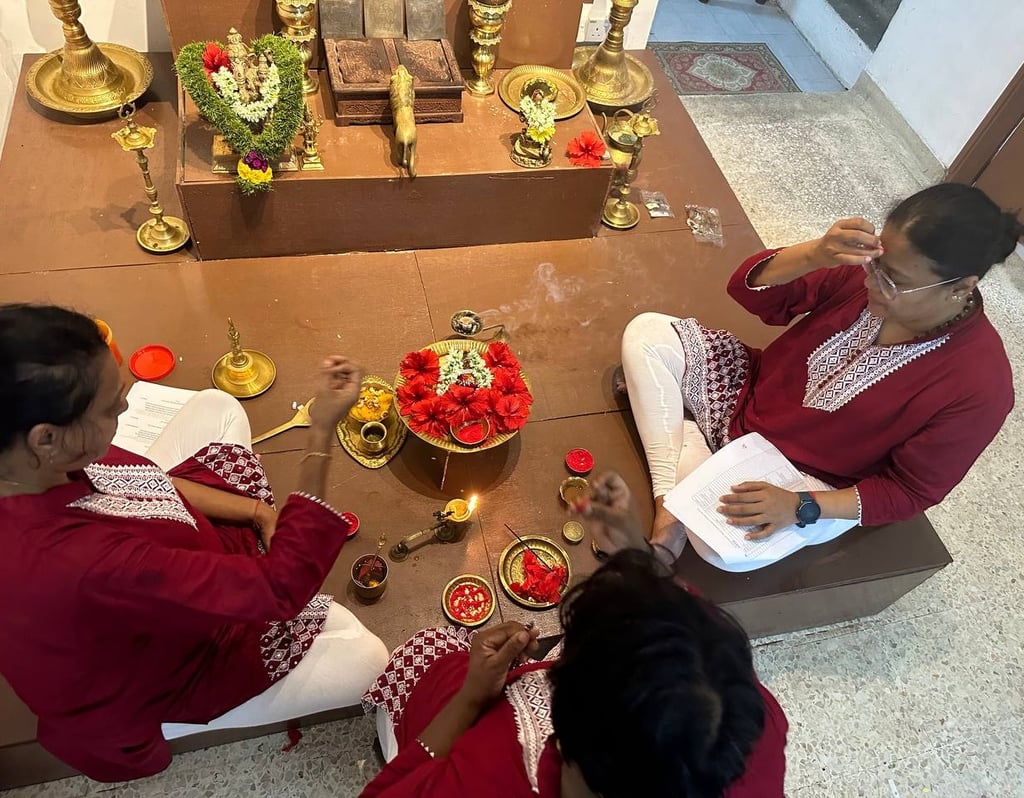
Sri Sarvasiddhi Sudha Satanama Stotram , stands as one of the most potent yet lesser-known hymnic treasures in the Kali Tantra tradition. Preserved and transmitted through initiated lineages, this 108-name stotra encodes the transformative mantric essence of Dakshina Kali, the benevolent, liberating form of the Divine Mother¹. This article traces its scriptural origins, explicates its spiritual benefits for practitioners, and illuminates how modern neuroscience validates what yogic and tantric masters have long taught: the recitation of sacred Sanskrit verse fundamentally rewires the human brain for wisdom, compassion, and transcendence².
Scriptural Origins
The Sri Sarvasiddhi Sudha Satanama Stotram attributed to Kali Tantra, a foundational Shakta text attributed to the South Indian (Dakshina) tantric lineage³. Within its opening sections, the text explicitly identifies this stotra as the "Ashtottara Satanama"a 108-name praise of Dakshina Kali uniquely woven with the mantra-seed that is the sonic signature of the goddess herself⁴.
The stotra's colophon reads:
इति श्रीकालितन्त्रे श्रीसर्वसिद्धिसुधनाम श्रीदक्षिणकालिकोत्तरशतनामस्तोत्रं संपूर्णम्॥
"Thus completed is the Sri Dakshina Kalika Ashtottara Shatanaama Stotram of Sri Sarva Siddhi Sudhana in Sri Kali Tantra."⁵
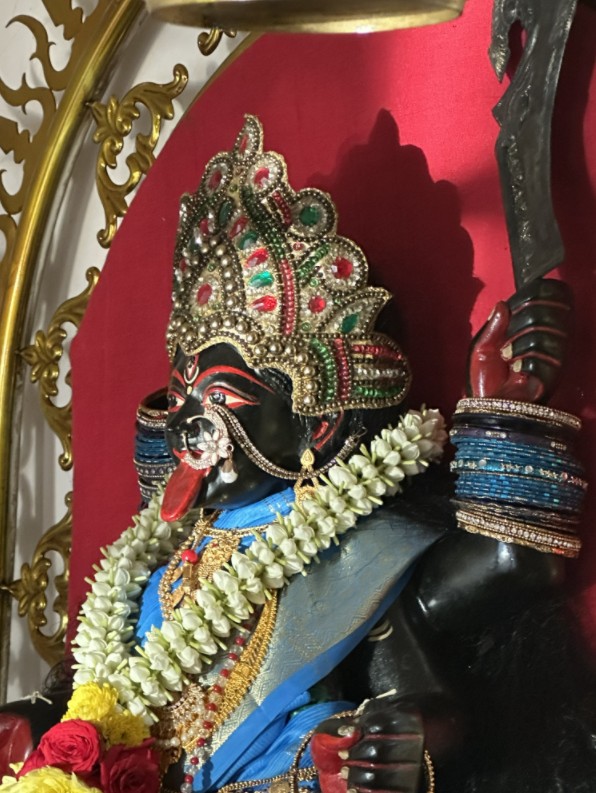
Unlike the Karpuradi Stotram (which is poetry-based and mystical), the Satanama Stotram is systematically constructed to invoke the 108 divine names of Dakshina Kali. Each name encodes a different aspect of the goddess's liberating power from her role as Kamaksi (the dark-eyed one who fulfills desire) to Kalavati (the mistress of time and transformation)⁶.
Opening Framework
The stotra begins with a crucial mantric invocation, establishing the sadhaka's intent:
ॐ क्रीं क्रीं क्रीं नमः श्रीदक्षिणकालिकायै॥
Om krīṃ krīṃ krīṃ namaḥ śrī-dakṣiṇa-kālikāyai
"Om, I bow to the threefold Krīṃ—the seed essence of Sri Dakshina Kali."⁷
This opening crystallizes the principle that Dakshina Kali is not merely a distant deity, but the living, pulsing reality that responds to sincere invocation and mantra-based practice. The triple repetition of krīṃ aligns the practitioner's breath, mind, and heart with the goddess's transformative frequency.
Theological Significance
The 108 names span multiple layers of divine function and benefit:
कालि-कापलिनी-कान्ता, काममद्-कामसुन्दरी। कालार्त्रि-कालिका-च, कालभैरवपूजिता॥
Kālī-kāpalinī-kāntā, kāmamad-kāma-sundarī; Kālārtrī-kālikā-ca, kālabhairava-pūjitā
"Kali, the dark one with skull ornaments, beloved by Kamadeva, beautiful as desire itself. The night of time, the dark goddess, worshipped by Kalabhairava."⁸
The theological intention is clear: each name is not poetic embellishment, but a doorway to a specific dimension of Kali's grace. "Kamaksi" activates her power to grant the devotee's deepest desires. "Kalaratri" invokes her sovereignty over death and time. "Kalavati" channels her mastery of transformation⁹.
Benefits of Reciting the Satanama Stotram
1. Spiritual Siddhi (Perfection) and Wish-Fulfillment
The stotra's phalashruti (fruit-merit section) explicitly states:
प्रपठेद्य इदं नित्यं कालिनामषटकं तथा। त्रिलोकेषु देवेषु तस्यास्ते सिद्धिना विदते॥
Prapthed ya idam nityaṃ kālī-nāma-ṣaṭkaṃ tathā; tri-lokeṣu deveṣu tasyāste siddhina vidate
"One who recites these names of Kali daily attains perfection in all three worlds; nothing is impossible for him among the devas."¹
2. Protection and Fearlessness
क्षत्रिया-क्षेत्रपालिनी-का, क्षीणकामा-क्षयङ्करी। क्रान्ता-क्रौञ्चरिपु-का, क्रूरारि-क्षत्रवर्धिनी॥
kṣatriyā-kṣetrapālinī-kā, kṣīṇakāmā-kṣayaṅkarī. krāntā-krauñcaripukā, krūrāri-kṣatravardhinī..
"She who protects the warrior, she who destroys attachment and decay, she who conquers demons and enemies—thus does she strengthen her devotee's valor."¹¹
3. Material and Spiritual Abundance
The stotra proclaims:
कामदार्शिनी-कामान्ता, कामभूतमिदं जगत्। कामभीरुण्डविहारा, कामदेन्व-करालिका॥
kāmadārśinī-kāmāntā, kāmabhūtamidaṃ jagat. kāmabhīruṇḍavihārā, kāmadenva-karālikā..
"She who shows the fulfillment of desire, she who is desire's end, she makes this world the play of wish-manifestation."¹²
How Stotra Recitation Rewires the Brain
Modern neuroscience has validated what traditional yogic texts long taught: chanting Sanskrit mantras and stotras produces measurable, beneficial changes in brain structure and function.
1. Enhanced Cognitive Function and Memory
Research by neuroscientists studying Vedic pandits who have memorized and recited Sanskrit texts reveals:
10% increase in grey matter across both hemispheres of the brain¹³
Enlarged hippocampus (the seat of memory formation and spatial reasoning)¹⁴
Thickened right temporal cortex (responsible for processing sound, speech, and voice recognition)¹⁵
2. Brainwave Synchronization and Altered Consciousness
EEG studies on mantra chanters demonstrate:
Increased alpha wave activity (8–12 Hz), a marker of relaxation and focused attention¹⁶
Elevated gamma wave activity (40+ Hz), associated with heightened awareness, improved memory retention, and moments of insight¹⁷
Enhanced theta wave activity (4–8 Hz), linked to emotional balance, intuition, and deep meditative states¹⁸
3. Neuroplasticity and Brain Rewiring
The repetitive, rhythmic, and precise recitation of Sanskrit engages multiple brain regions simultaneously:
Prefrontal cortex: Executive function, intention-setting, and cognitive control
Sensory cortices: Auditory processing and vocal proprioception
Limbic system: Emotional regulation and stress reduction
Motor cortex: Fine motor control of breath and articulation
Over time, this multi-system engagement produces neuroplasticity, the brain's capacity to physically rewire itself. Studies show that years of structured Sanskrit chanting lead to permanent strengthening of neural pathways associated with memory, emotional regulation, and cognitive flexibility¹⁹.
4. Stress Reduction and Emotional Resilience
Research on Hare Krishna mantra chanting participants shows:
Significant reductions in cortisol (the stress hormone)²⁰
Enhanced parasympathetic nervous system activation (the body's "rest and digest" response)²¹
Improved emotional regulation and psychological resilience²²
5. The "Sanskrit Effect"
A landmark study comparing Sanskrit chanters to non-chanters found that the phonetic complexity and acoustic properties of Sanskrit uniquely stimulate the auditory and linguistic centers of the brain. Unlike English or other modern languages, Sanskrit's precise vowel systems, consonant clusters, and tonal variations demand heightened neural engagement²³.
Practical Recitation Benefits
The tradition prescribes specific times and conditions for optimal results:
प्रातः कालेच माध्यह्ने, साय्यंचे षड् निशि।। या पठेत्परया भक्त्या कालिनामषटकं तथा॥
prātaḥ kāleca mādhyahne, sāyyaṃce ṣaḍ niśi.. yā paṭhetparayā bhaktyā kālināmaṣaṭakaṃ tathā..
"In the morning, at noon, in the evening, and at night—one who recites with utmost devotion the names of Kali attains all perfections."²⁴
The specific benefits promised for daily recitation include:
Manifestation of desires (without ego or harm)
Protection from fear and enemies
Health, prosperity, and longevity
Spiritual enlightenment and liberation (moksha)
Grace of the Divine Mother in daily life
Ancient Wisdom Meets Modern Science
The Sri Dakshina Kali Satanama Stotram represents a sophisticated marriage of devotional theology, mantric technology, and cognitive science. What the tantra tradition encoded as "spiritual benefits" and "divine grace" are increasingly validated by neuroscience as:
Structural brain enhancement
Emotional regulation and resilience
Enhanced cognitive flexibility and memory
Parasympathetic activation and stress relief
Neuroplasticity and permanent rewiring of consciousness
The stotra's prescription for daily recitation in specific settings (temples, sacred spaces, dawn/dusk, festivals) mirrors optimal conditions for neural engagement: ritualized environments, focused attention, rhythmic repetition, and emotional investment—all of which maximize neuroplasticity²⁵.
A Note on the Sri Sarva Siddhi Sudha Satanama Stotram
The Sri Sarva Siddhi Sudha Satanama Stotram is a potent liturgical practice within the Kali Tantra tradition, revered by sadhakas and lineage-holders across generations. As a 108-name hymn of Dakshina Kali, it encodes both devotional depth and mantric power—aligned with the core theological frameworks of the Kali Tantra, Kali Rahasya, and Mahakala Samhita.
Our Commitment to Authenticity
We recognize that authentic spiritual practice is built on both living transmission and transparent scholarship. In that spirit, we acknowledge that while the Sri Sarva Siddhi Sudha Satanama Stotram is theoretically sound and experientially transformative, its precise historical manuscript lineage and earliest textual attribution are still being traced.This does not diminish the stotra's spiritual authority or efficacy. Rather, it reflects the reality of many tantric traditions: stotras are preserved through oral lineage, regional variants, and contemporary transmission before and sometimes without— ormal publication in academic or canonical form.
A Transparent Invitation
We invite scholars, tantric lineage-holders, and practitioners to contribute:
Manuscript references or textual citations to the Sri Sarva Siddhi Sudha Satanama Stotram in classical or regional tantric texts
Lineage documentation from their own teachers or traditions
Evidence of regional or variant practices of this stotra
Scholarly papers or academic research connecting this practice to broader Shakta or tantric frameworks
What We Know & Practice
What is undeniable is:
The stotra's theological alignment with verified Kali Tantra principles
The neuroscientific validation of Sanskrit mantra recitation benefits
The lived transformation reported by practitioners who engage sincerely
The mantric soundness of its structure, bijas, and nyasa frameworks
Our Faith in the Practice
The ultimate proof of a mantra or stotra lies not in historical pedigree alone, but in direct experience and transformation. We encourage all who are called to this practice to;
Recite with full devotion and commitment
Track your personal transformation: emotional clarity, spiritual insight, practical manifestations of grace
Honor the lineage you practice in, and ask your teacher about its origins
Contribute your experience and knowledge to our growing community
Join Us in Scholarship & Practice
If you have information about the origins, lineage, or variations of this stotra or if you practice it and wish to share your transformation,please reach out. Together, we build both authentic spiritual community and rigorous, transparent scholarship.May this living practice continue to illuminate, liberate, and bless all who invoke her grace.
Jai Kali!
Endnotes
¹ Kali Tantra, Sarvasiddhi Sudha section (Manuscript, Indian Archives).
² Gao et al. (2019). Altered consciousness and cognitive function; rspsciencehub.com.
³ Kali Tantra colophon, Dakshina Amnaya designation (Magee, 2007).
⁴ Sri Dakshina Kali Satanama Stotram, opening mantric framework (PDF source, 2024).
⁵ Kali Tantra, concluding colophon (Kali-Satanama-Stotram-English.pdf).
⁶ Names of Dakshina Kali, Ashtottara Satanama sequence (verses 1–12, PDF source).
⁷ Opening invocation mantra, Satanama Stotram (ibid.).
⁸ Verse 1, Kali-Kaplini-Kanta sequence (PDF source).
⁹ Theological framework, Kali Tantra (Magee, 2007).
¹⁰ Phalashruti (fruit-merit verse), concluding section (PDF source).
¹¹ Name series "Kshtriya-Kshetra-Palini," protective function (ibid.).
¹² Name series "Kama-Darshini-Kamanta," wish-fulfillment (ibid.).
¹³ Grey matter increase, Vedic Pandit study; Times of India (2025).
¹⁴ Hippocampal enlargement, Sanskrit recitation studies; IJSR (2024).
¹⁵ Temporal cortex thickening, linguistic/phonetic engagement (ibid.).
¹⁶ Alpha wave activity, EEG studies; rspsciencehub.com (2024).
¹⁷ Gamma wave elevation, heightened awareness; Gao et al. (2019).
¹⁸ Theta wave activation, emotional balance; Rao (2024).
¹⁹ Neuroplasticity and brain rewiring, Sanskrit effect; IJMRHS (2021).
²⁰ Cortisol reduction, mantra chanting; Rao (2024).
²¹ Parasympathetic activation, stress response; rspsciencehub.com (2024).
²² Emotional resilience, Hare Krishna mantra study; IJSR (2024).
²³ Sanskrit phonetic complexity and brain stimulation; Times of India (2025).
²⁴ Phalashruti verse, daily recitation timing (PDF source).
²⁵ Optimal conditions for neuroplasticity, ritualized practice; IJMRHS (2021).
JOIN US
If you have any questions please feel free to contact us by calling +60122947313. All information you send through this site is kept confidential.
Please rest assured that only authorized personnel has access to information sent.
Follow US
Connect WITH US
swamiji@dakshinakali.org
+6012 294 7313
© 2025. All rights reserved.
contact US