dakshinakali.org

Panchayatna Puja
When Ancient Wisdom Meets Latest Neuroscience
2/15/202514 நிமிடங்கள் வாசிக்கவும்
The Sacred Practice That Rewires Your Brain
Om Kali,
Long before neuroscientists mapped the prefrontal cortex or discovered neuroplasticity, ancient Hindu wisdom practitioners developed Panchayatana Puja—a sophisticated ritual system involving the worship of five main deities arranged in a quincunx or mandala pattern, particularly within the Smarta tradition.¹ This millennia-old practice, now supported by cutting-edge neuroscience, offers profound insights into how ritual worship can literally reshape the brain, enhance emotional regulation, and promote holistic well-being.²
Origins: A Tradition Older Than We Thought
While Panchayatana Puja is often attributed to Adi Shankaracharya (8th century CE), archaeological evidence reveals a far more ancient lineage.¹ Temples and stone mandalas arranged for Panchayatna puja have been found from the Kushan Empire era (pre-300 CE) and the Gupta Empire period, demonstrating that this practice long predates Adi Shankaracharya.¹
The earliest known textual references to Panchayatana worship are found in key Puranic texts, with evidence suggesting it predates formal codification in the 8th century CE.¹ These Puranic mentions strongly suggest that worship of five deities in quincunx pattern existed as a foundational practice in ancient Hindu tradition.¹
Architectural Integration Across India
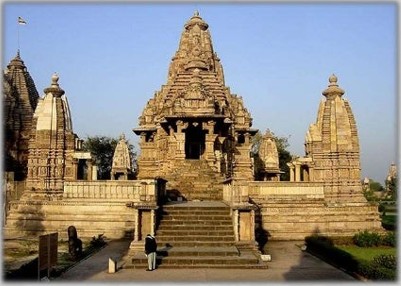
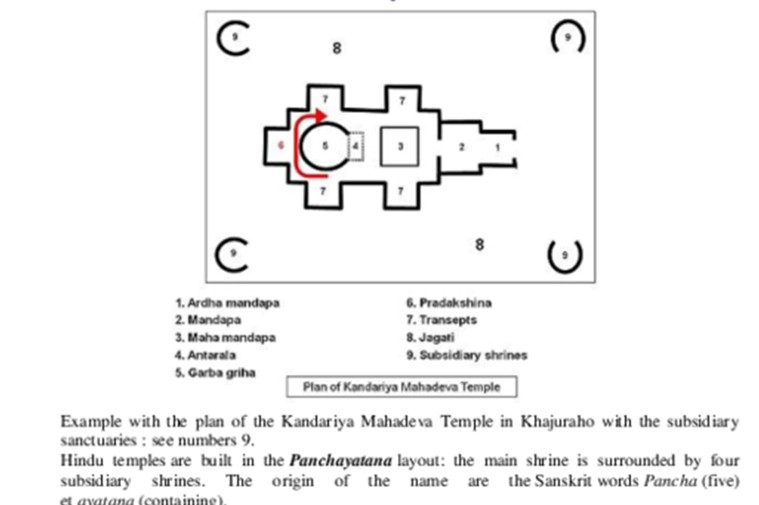
Major Hindu temples from Odisha to Karnataka and Kashmir feature central shrines with four surrounding shrines, mirroring the Panchayatana arrangement.¹ This widespread architectural pattern serves as tangible evidence of the practice's deep integration into Hindu spiritual and temple life across diverse geographical regions.¹ The quincunx arrangement engages multiple brain regions simultaneously, particularly those involved in spatial processing, pattern recognition, and symbolic integration.³
Scriptural Foundations That Guide the Practice
Several Tantric and Purana texts contain verses describing Panchayatana Puja, revealing its roots in pre-Shankara traditions and the Tantric ritual milieu.¹ The most explicit shlokas come from the Skanda Purana and Devi Bhagavata Purana.¹
Skanda Purana
The Skanda Purana contains explicit references to Panchayatana worship, revealing its significance in pre-Shankara Tantriaditions.¹
नारद उवाच-
तत्रेदं विमलं लिगमोंकारं नाम शोभनम्।
यस्य स्मरणमात्रेण मुच्यते सर्वपातकैः ॥ ३.४.१ ॥
nārada uvāca-
tatredaṃ vimalaṃ ligamoṅkāraṃ nāma śobhanam |
yasya smaraṇamātreṇa mucyate sarvapātakaiḥ || 3.4.1 ||
"Nārada says: There, this pure linga, Omkāra by name, is beautiful; by merely remembering it, one is liberated from all sins."¹
एतत्परतरं ज्ञानं पंचायतनमुत्तमम्।
सेवितं मुनिर्भिर्नित्यं वाराणस्यां विमोक्षणम्॥ ३.४.२ ॥
etatparataraṃ jñānaṃ pañcāyatanamuttamam |
sevitaṃ munirbhirnityaṃ vārāṇasyāṃ vimokṣaṇam || 3.4.2 ||
"This highest knowledge is Panchāyatna, which is constantly practiced by sages in Varanasi for liberation."¹ This verse emphasizes that Panchayatna represents not merely a ritual but a sophisticated meditative pathway, integrating tantra's three foundational stages of sadhana: puja (ritual invocation), japa (mantra repetition), and dhyana (meditation absorption).⁴
तत्र साक्षान्महादेवः पंचायतनविग्रहः।
रमते भगवान् रुद्रो जन्तूनामपवर्गदः ॥ ३.४.३ ॥
tatra sākṣānmahādevaḥ pañcāyatanavigrahaḥ |
ramate bhagavān rudro jantūnāmapavargadaḥ || 3.4.3 ||
"There, Mahadeva is manifest as the Panchayatna idol; Rudra dwells there, bestowing liberation to all beings."¹ This verse underscores the non-dualistic principle embedded in Panchayatna practice: divine presence manifests through multiple sacred forms yet remains fundamentally singular, reflecting neuroscience's discovery of unified consciousness despite distributed neural processing.⁵
एतत्पाशुपतं ज्ञानं पंचायतनमुच्यते।
तदेतद्विमलं लिगमोंकारं समुपस्थितम्॥ ३.४.४ ॥
etatpāśupataṃ jñānaṃ pañcāyatanamucyate |
tadetadvimalaṃ ligamoṅkāraṃ samupasthitam || 3.4.4 ||
"This knowledge belonging to the Pashupatas is called Panchayatana; it is truly the pure Omkara linga that is present."¹
The invocation of Om, the primordial sacred sound, directly connects this practice to mantra-based meditation, where neuroscience documents that chanting sacred sounds quiets default mode network activity, reduces mind-wandering, and generates theta brainwaves characteristic of deep meditative states.⁶
Devi Bhagavata Purana
The Devi Bhagavata Purana (11th Skanda, 17th chapter, verses 35-38) provides specific instructions for the spatial arrangement and worship methodology, establishing systematic progression from external ritual to internalized meditation.¹
देवस्थानानि कृतानि पंच
मध्ये भवानी माघवश्चैशान्ये।
गिरिजानाथोऽग्नेय्यां गणेशः
पश्चिमे सविता पूजनीयः।
devasthānāni kṛtāni pañca
madhye bhavānī māghavaścaiśānye |
girijānātho'gneyāṃ gaṇeśaḥ
paścime savitā pūjanīyaḥ |
"Establish the five places of worship: Bhavani in the middle, Madhava in the northeast, Girijanatha/Shiva in the southeast, Ganesha in the southwest, Surya/Savitṛ in the northwest, and worship them accordingly."¹ This precisely prescribed geometric spatial arrangement mirrors neuroscientific findings on how spatial-visual cognition activates frontal and parietal cortices, simultaneously enhancing sustained attention and emotional-cognitive integration.³
The Practice: Method and Significance, Core Concept and Deities
The Panchayatana Puja centers around five principal deities: Ganesha, Aditya (Surya, the Sun), Shiva, Vishnu, and Ambika (Devi/Shakti, the Divine Mother).¹ This worship system encourages devotees to recognize the fundamental unity underlying various divine forms while simultaneously emphasizing non-sectarian, inclusive practice.¹
A devotee selects their preferred form (Ishta Devata) as the central deity, arranging the other four deities around it in a geometric mandala pattern.¹ Daily ritual worship, typically performed by householders, positions the chosen central deity flanked by the other four in the ritual arrangement, embodying tantra's progression from Saguna (form-based) to Nirguna (formless) meditation.⁴
The Five Deities and Their Cosmic Roles
The five deities of Panchayatana Puja—Shiva, Vishnu, Devi (Shakti), Surya, and Ganesha—together constitute a unified ritual arrangement symbolizing both fundamental cosmic principles and spiritual inclusivity within Hindu philosophy.¹
Shiva – Embodies transformation, dissolution, and transcendence.¹ He represents the principle of spiritual liberation (moksha) and the dissolving of illusion and egotism, corresponding neurologically to the amygdala's capacity for releasing deep fear and ego-attachment during contemplative states.⁷
Vishnu – Personifies preservation, cosmic order, and sustenance of all existence.¹ His nurturing nature signifies compassion, harmony, and the maintenance of dharma (cosmic law), reflecting the ventromedial prefrontal cortex's essential role in generating compassionate emotional responses.⁸
Devi (Shakti) – Represents creative power, feminine energy, and the dynamic force animating all existence.¹ As the cosmic mother, she embodies fertility, strength, and unconditional love, activating oxytocin-mediated neural pathways associated with social bonding and deep connection.⁹
Surya (the Sun) – Symbolizes illumination, knowledge, vitality, and pure consciousness.¹ Surya functions as the life force—the fundamental energy source who dispels ignorance and darkness.¹
Ganesha – Signifies wisdom, auspicious beginnings, and the removal of obstacles.¹ As the guardian of thresholds and transitions, Ganesha blesses success and insight on all spiritual and worldly endeavors, neurologically corresponding to the anterior cingulate cortex's executive function in overcoming cognitive obstacles.¹⁰
Cosmic and Elemental Correspondence
The deities symbolically represent the five fundamental elements (earth, water, fire, air, space), directly correlating cosmic aspects with divinity.¹ Each deity associates with one of the five Pancha Bhuta (fundamental elements):¹
Shiva (in our tradition Samba Sadashiva) : Fire (Agni)—represents transformation and spiritual energy
Vishnu ( in our tradition, Lakshmi Narayana ) : Water (Apas)—embodies nourishment and adaptability
Devi (in our tradition, Mahakala Sahita Srimad Dakshinakali Siddheswari) : Air (Vayu)—signifies movement and dynamic creation
Surya ( in our tradition, Navagraha Surya Deva): Space (Akasha)—symbolizes light, expansion, and consciousness
Ganesha in our tradition (Kali Ganapathi Dhundhiraja): Earth (Prithvi)—represents stability and groundedness
Materials: Natural Stones as Divine Representations
Instead of actual carved idols, you can also use natural stones representing each deity .¹ These sacred materials include:
Shonabhadram for Ganesha
Spatika (crystal) for Surya
Saligram for Vishnu
Banalingam for Shiva
Ambikam stone for Devi
Philosophical and Spiritual Significance
The practice deliberately aims to transcend sectarian division (bheda-bhava), fostering the understanding that all deities represent expressions of the same supreme reality, embodying Advaita Vedanta's core teaching.¹ It harmonizes worship across Shaiva, Vaishnava, Shakta, Ganapatya, and Saura traditions by emphasizing all five forms as equally valid divine representations.¹
Panchayatana's simultaneous worship of five deities fully embodies the Advaita Vedanta principle that all divine forms manifest from the same supreme reality (Brahman).¹ The ritual arrangement—featuring one central deity surrounded by the other four in cardinal directions—emphasizes unity expressed through diversity: no single form ranks above another, actively supporting tolerance and spiritual pluralism in practice.¹
Panchayatana institutionalizes inclusive non-sectarian worship specifically designed to counter sectarian division in Hindu practice.¹ The arrangement combined with personal selection of the central deity allows devotees to simultaneously honor tradition while following their unique devotional inclinations.¹ The practice is foundational for achieving spiritual unity, maintaining daily devotion, and realizing the divine manifesting equally in multiple sacred forms.¹
Scriptural references to Panchayatana Puja appear consistently in major Puranas (Vaishnava, Shaiva, Shakta), indicating both ancient origin and widespread geographical practice.¹
How Ritual Worship Transforms the Brain
1. Neuroplasticity and Structural Brain Changes
The brain constantly reorganizes itself through neuroplasticity—the fundamental ability to form new neural connections throughout life.¹¹ Regular spiritual practices, particularly ritualistic worship, trigger profound neuroplastic structural changes.¹¹
Consistent meditation and prayer practices demonstrably increase cortical thickness in the prefrontal cortex—the brain region responsible for executive functions, decision-making, emotional regulation, and behavioral self-control.¹²,¹³
2. Enhanced Cognitive Flexibility Through Multi-Deity Worship
Cognitive flexibility, the ability to shift smoothly between different concepts and adapt to novel, changing environments, is primarily mediated by the dorsolateral prefrontal cortex (dlPFC).¹⁴ Research on religious cognition reveals that flexible religious commitment and diverse spiritual thought patterns directly depend on intact dlPFC functionality.¹⁴
Panchayatana practice inherently promotes cognitive flexibility by requiring practitioners to simultaneously hold multiple divine perspectives.¹⁴ Unlike sectarian worship focusing exclusively on a single deity, this practice systematically trains the mind to navigate between different divine archetypes—Shiva's transformative power, Vishnu's preserving compassion, Shakti's creative dynamism—while recognizing their ultimate fundamental unity.¹⁴
Research confirms that openness and cognitive flexibility are necessary prerequisites for flexible and adaptive religious commitment.¹⁴ By honoring five distinct divine forms as expressions of one supreme reality (Brahman), practitioners develop "set-shifting ability," neuroscience's term for the capacity to change mental frameworks—a fundamental component of cognitive flexibility extending beyond spiritual contexts into everyday problem-solving and emotional adaptation.¹⁵
3. Emotion Regulation
The prefrontal cortex functions not in isolation but maintains extensive connections with the limbic system, particularly the amygdala (the brain's primary threat detector) and the hippocampus (memory formation).¹⁶ This prefrontal-limbic network is essential for emotional regulation—the capacity to modulate emotional responses appropriately.¹⁶
Mindfulness meditation training significantly alters stress-related amygdala connectivity patterns.¹⁷ Specifically, meditation reduces functional connectivity between the amygdala and the subgenual anterior cingulate cortex (sgACC), a neural pathway strongly associated with chronic stress and anxiety.¹⁷
For Panchayatana practitioners, ritualistic elements—the methodical arrangement of sacred stones, recitation of mantras, offering of flowers and incense—engage ritual behavioral systems.⁴ These repetitive, structured ritual actions actively enhance prefrontal cortex function while simultaneously reducing amygdala reactivity.⁴
4. The Default Mode Network and Self-Transcendence
The default mode network (DMN)—comprising the medial prefrontal cortex, posterior cingulate cortex, and other interconnected regions—is active during mind-wandering, self-referential thought, and disengagement from external tasks.¹⁸
Experienced meditators demonstrate relatively deactivated DMN during meditation across all meditation modalities.¹⁸ Furthermore, they show stronger functional connectivity between the posterior cingulate cortex (a major DMN hub) and dorsolateral prefrontal cortex regions involved in self-monitoring and cognitive control—both at baseline and during meditation sessions.¹⁸ This indicates regular practice establishes a new "default mode" characterized by present-centered awareness rather than ruminative mind-wandering.¹⁸
Panchayatana Puja facilitates this crucial DMN modulation through its emphasis on non-sectarian unified consciousness.¹ The philosophical teaching that all five deities represent manifestations of one Brahman directly counteracts the DMN's innate tendency toward rigid, ego-based categorization.⁵
5. Reward Circuitry and Intrinsic Motivation
One of neuroscience's most remarkable discoveries is that religious and spiritual experiences robustly activate the brain's reward circuitry, particularly the nucleus accumbens—a region central to processing rewards and motivation.¹⁰
A groundbreaking fMRI study with devout Mormons revealed that spiritual experiences ("feeling the Spirit") consistently activated bilateral nucleus accumbens, ventromedial prefrontal cortex, and frontal attentional regions.¹⁰ Remarkably, nucleus accumbens activation preceded peak spiritual feelings by 1-3 seconds, demonstrating the reward system actively drives and motivates spiritual experience.¹⁰
For Panchayatana practitioners, daily ritual becomes progressively self-reinforcing: the worship act itself triggers dopaminergic reward pathways, establishing positive associations that continuously motivate sustained practice.¹⁰
6. Oxytocin
Oxytocin, widely termed the "love hormone," plays fundamental roles in social bonding, empathy, and interpersonal trust.⁹ Recent research establishes a compelling direct link between oxytocin and spiritual experience.⁹
A randomized controlled study demonstrated that intranasal oxytocin administration increased self-reported spirituality on multiple measures, with effects persisting significantly a week later.¹⁹ Oxytocin also boosted participants' positive emotions during meditation at both explicit and implicit emotional levels.¹⁹
For Panchayatana practitioners, the devotional aspect of worship—particularly when performed communally or when contemplating the loving, nurturing aspects of the Divine Mother (Devi) or Vishnu's protective compassion—naturally stimulates oxytocin release.¹⁹,²⁰ This neurochemical response enhances feelings of connection not just to the divine but to all sentient beings, directly supporting the traditional claim that Panchayatana Puja cultivates universal love and actively reduces sectarian division.⁹
7. Neurotransmitter Modulation
Meditation and contemplative practices modulate key neurotransmitter systems through multiple neurological pathways.¹¹
GABA (Gamma-Aminobutyric Acid): As the brain's primary inhibitory neurotransmitter, GABA actively reduces neural excitation and promotes a state of calm.¹¹ Studies consistently show that meditation increases GABA levels, producing substantial anxiety reduction and improved emotional regulation.¹¹ The focused attention required in Panchayatana Puja—maintaining awareness across five deity forms while centering on one's Ishta Devata—engages prefrontal cortex regions that enhance GABAergic cortical inhibition.¹¹
Glutamate: As the brain's primary excitatory neurotransmitter, glutamate increases measurably during meditation as prefrontal cortex activity intensifies.¹¹ The balance between glutamate (excitation) and GABA (inhibition) remains crucial for optimal brain function.¹¹ Panchayatana's combination of focused attention (increasing glutamate) and calming ritual structure (enhancing GABA) may establish an optimal neurochemical balance for spiritual experience.¹¹
Serotonin: Although research findings remain mixed, evidence suggests meditation increases serotonin levels, which actively modulate mood, reduce anxiety, and enhance emotional well-being.⁶ The positive emotional tone cultivated during worship—gratitude, devotion, reverence—likely stimulates serotonergic neural pathways, substantially contributing to the sustained peace and contentment practitioners consistently report.⁶
8. Theta Brain Waves and Deep Meditative States
Brain activity generates measurable electrical patterns classified as brain waves.¹ Theta waves (4-8 Hz) characteristically associate with deep relaxation, creativity, emotional healing, and the threshold between wakefulness and sleep.¹
Research consistently demonstrates that meditation significantly increases theta wave activity, especially in frontal and central brain regions.¹ Experienced Buddhist meditators exhibited statistically significantly higher theta amplitude during meditation compared to ordinary relaxation.¹ Theta waves reflect internalized attention and emotional experience, indicating meditation facilitates access to deeper states of consciousness.¹
During Panchayatana Puja, particularly when practitioners enter states of deep devotion or contemplation on the five-fold unity underlying the deities, theta activity naturally increases markedly.¹ This neurological shift corresponds to subjective experiences of expanded awareness, dissolution of ego boundaries, and profound inner peace—states consistently valued across contemplative traditions for millennia.⁶
9. Symbolic Processing and the Prefrontal Cortex
The ability to understand and manipulate symbols represents a fundamental hallmark of human cognition, mediated primarily by the prefrontal cortex.²¹ Symbolic reference understanding that one object can represent another requires sophisticated neural networks capable of high-order associations.²¹
Panchayatana Puja operates as fundamentally a symbolic practice: natural stones represent deities, which in turn symbolize cosmic principles (elements, gunas, aspects of consciousness).¹ Regular engagement with this multi-layered symbolic system exercises the prefrontal cortex's capacity for semantic association as the mapping process whereby initially meaningless forms gradually acquire profound meaning.²¹
Studies in primates reveal that prefrontal neurons possess the unique capacity to associate numerical values with symbolic shapes, a process foundational to symbolic thinking.²¹ In humans, symbolic reference emerges from the extensively expanded lateral prefrontal cortex, and symbolic tasks robustly activate prefrontal regions during acquisition and learning.²¹ By repeatedly engaging with Panchayatana symbols, practitioners progressively strengthen these prefrontal networks, enhancing not just spiritual understanding but general symbolic reasoning abilities extending to language, mathematics, and abstract thought.²¹
10. Attention Networks and Mindful Focus
Sustained attention is essential for meditation and ritual practice, mediated by networks involving the anterior cingulate cortex (ACC) and frontal attentional regions.¹⁰ Studies of spiritual experience document that attentional activation in the anterior cingulate and frontal eye fields is significantly greater during religious experience.¹⁰
Panchayatna Puja requires sustained, distributed attention: practitioners must maintain awareness of the spatial arrangement, recall the appropriate mantras, execute ritual gestures precisely, and simultaneously hold the conceptual framework of unity in diversity.⁴ This complex attentional demand progressively strengthens ACC and prefrontal attention circuits.⁴ Research confirms that mindfulness training substantially enhances network efficiency and connectivity of the ACC, improvements that reliably transfer to everyday attentional capacity and cognitive performance.¹⁰
Japa, the repetitive chanting of a mantra, usually accompanied by a mala (prayer beads), progressively internalizes worship and strengthens one's mind to remain focused.⁴ Each act is understood not as isolated, but as systematically preparatory for progressively deeper meditative states: japa creates the mental steadiness necessary for dhyana, wherein a practitioner's mind becomes absorbed in the deity (Saguna meditation) or the formless absolute (Nirguna meditation).⁴
The Holistic Benefits: Integration of Mind, Body, and Spirit
The neuroscientific evidence demonstrates that Panchayatana Puja simultaneously engages multiple brain systems:
Structural changes: Increased cortical thickness in prefrontal and parietal cortex regions¹³
Functional connectivity: Enhanced integration between prefrontal control networks and limbic emotion centers¹⁸
Neurochemical optimization: Balanced neurotransmitter systems (GABA, glutamate, serotonin) and beneficial hormones (oxytocin, dopamine)
Stress reduction: Markedly decreased amygdala reactivity through regular spiritual practice¹⁷
Reward sensitivity: Enhanced dopaminergic responses to prosocial and spiritual stimuli¹⁰
Cognitive enhancement: Improved attention, memory, cognitive flexibility, and emotional regulation¹⁴,¹⁵
These neurological changes correlate directly with traditional benefits attributed to Panchayatana Puja:
Spiritual Growth: Recognizing divine unity through diverse sacred forms enables practitioners to transcend sectarian limitations and cultivate expansive consciousness.¹
Emotional Equilibrium: Regular, consistent practice substantially enhances emotional regulation capacity, effectively reducing anxiety and promoting lasting inner peace.¹⁷
Cognitive Clarity: The complex demands of symbolic meditation and attentional focus systematically sharpen mental faculties and cognitive flexibility.²¹
Social Harmony: Honoring multiple divine forms cultivates tolerance, spiritual inclusivity, and appreciation for diversity—qualities naturally extending to human relationships.¹
Physical Health: The integrated stress-reduction and neurochemical optimization promote overall physiological well-being, supporting immune function and healthy longevity.¹⁷,⁹
Applying Neuroscience to Deepen Practice
Understanding the neuroscience of Panchayatana Puja provides practical guidance for practitioners:
Consistency Matters: Neuroplastic structural changes require repeated stimulation over an extended time.¹¹ Daily practice, even if brief (12-15 minutes), proves substantially more effective than occasional extended sessions.¹¹
Multisensory Engagement: Engaging all senses—sight (visual symbols), sound (sacred mantras), touch (ritual offerings), smell (incense aromatic experience)—simultaneously activates multiple brain regions.¹
Focused Yet Relaxed: Balancing concentrated attention with relaxed receptive awareness optimizes the glutamate-GABA neurochemical balance and generates theta wave activity.¹,¹¹
Embodied Practice: Physical gestures (mudras, prostrations) integrate motor cortex activity with symbolic understanding, substantially enhancing embodied awareness and memory consolidation.⁴
Community Worship: Practicing communally with others naturally enhances oxytocin release and strengthens social bonding and connection.⁹
Contemplative Integration: Beyond mechanical ritual performance, meditating on philosophical meaning—the unity underlying divine diversity—engages abstract reasoning and semantic neural networks.²¹
The Convergence of Ancient Wisdom and Modern Science
Panchayatana Puja represents a remarkable convergence of ancient spiritual insight and contemporary neuroscience.² What Vedic seers and Tantric practitioners intuitively understood millennia ago—that certain ritual practices transform consciousness, enhance well-being, and reveal underlying unity—now receives confirmation in brain imaging studies, neurochemical analyses, and rigorous cognitive assessments.⁵
The Sanskrit verses from the Skanda Purana describe Panchayatana as the "highest knowledge" (etatparataraṃ jñānam) practiced by sages for liberation (vimokṣaṇam).¹ Modern neuroscience reveals the neurobiological substrate of this liberation: the systematic reorganization of neural circuitry toward greater integration, enhanced flexibility, emotional balance, and transcendent awareness.¹¹
This integration does not reduce the sacred to material mechanisms; rather, it illuminates how the physical brain serves as the biological instrument through which spiritual transformation occurs.² The ancient practice requires no validation from neuroscience to demonstrate its value—it has sustained sincere practitioners for millennia.¹ However, the scientific evidence provides contemporary seekers a complementary framework for understanding and progressively deepening their spiritual practice.²
Facing increasing mental health challenges, social fragmentation, and existential confusion in the modern world, ancient practices like Panchayatna Puja offer neurologically validated pathways to resilience, integration, and profound meaning.² The practice honors both scientific truth and spiritual wisdom, demonstrating that rigorous inquiry and reverent devotion need not conflict—they can illuminate each other, jointly revealing the profound architecture of consciousness itself.⁵
In the words of the Skanda Purana: "This knowledge belonging to the Pashupatas is called Panchayatna; it is truly the pure Omkara linga that is present" (etat pāśupataṃ jñānaṃ pañcāyatanamucyate).¹ That divine presence—whether understood as absolute reality, unified consciousness, or optimally integrated brain function—remains eternally accessible through dedicated, sincere practice, inviting each practitioner to discover the transformative power of worshipping the One through infinite divine forms.¹
May this practice bring you balance, clarity, and transcendent insight.
Jai Kali!
Endnotes
Archaeological and Historical Evidence: Kushan and Gupta Empire Panchayatana temples and stone mandalas (pre-300 CE); Skanda Purana (3.4.1-4) references to Panchayatana worship as cited in Tantric and Smarta references; Devi Bhagavata Purana (11.17.35-38); Major Hindu temples from Odisha to Karnataka and Kashmir feature central shrines with four surrounding shrines.
Esperandio, M. R. G., et al. (2025). A review of the neuroscience of religion. Frontiers in Neuroscience, 19. https://www.frontiersin.org/journals/neuroscience/articles/10.3389/fnins.2025.1587794/full
Von der Heydt, R. (2013). Image parsing mechanisms of the visual cortex. https://www.cs.jhu.edu/~ayuille/courses/Stat271-Fall13/VonderHeydt_ImageParsing_neuroscience.pdf; Paik, S. B., & Ringach, D. L. (2022). A theory of cortical map formation in the visual brain. Nature Communications, 13, 2303.
Chamunda Swami Ji. The four stages of sadhana in tantra: Puja (ritual invocation), Japa (mantra repetition), Dhyana (meditation), and Samadhi (absorption).
Kapogiannis, D., et al. (2009). Cognitive and neural foundations of religious belief. Proceedings of the National Academy of Sciences, 106(12), 4876-4881.
Perry, G. (2022). How chanting relates to cognitive function, altered states. PubMed Central; Dutta, A. (2025). Mantras and the mind: The neuroscience of sacred sound.
Taren, A. A., et al. (2015). Mindfulness meditation training alters stress-related amygdala resting state functional connectivity. Social Cognitive and Affective Neuroscience, 10(12), 1758-1768.
Gu, S., et al. (2021). Functions of the ventromedial prefrontal cortex in emotion regulation. Nature Scientific Reports, 11, 18031.
Van Cappellen, P., et al. (2016). Oxytocin enhances spirituality. Duke University. https://today.duke.edu/2016/09/oxytocin-enhances-spirituality-new-study-says
Ferguson, M. A., et al. (2016). Reward, salience, and attentional networks are activated by religious experience. Social Cognitive and Affective Neuroscience, 13(12), 1271-1279.
Newberg, A. B., & Iversen, J. (2003). The neural basis of the complex mental task of meditation. Medical Hypotheses, 61(2), 282-291.
Newberg, A. B., & Waldman, M. R. (2024). Transform your brain in twelve minutes. The Bridge Fellowship. https://www.thebridgemm.com/devotionals/transform-your-brain-in-twelve-minutes
Lazar, S. W., et al. (2005). Meditation experience is associated with increased cortical thickness. NeuroReport, 16(17), 1893-1897.
Ferguson, M. A., et al. (2022). The neural underpinning of religious beliefs. PLOS ONE, 17(10).
Goel, P., et al. (2018). Cognitive flexibility and religious disbelief. Psychological Research, 83(8), 1749-1759.
Banks, S. J., et al. (2011). Prefrontal brain activation during emotional processing. Cognitive, Affective, & Behavioral Neuroscience, 11(2), 217-231.
Lazar, S. W., et al. (2011). Meditation experience is associated with differences in default mode network activity. Proceedings of the National Academy of Sciences, 108(50), 20254-20259.
Jia, Z., et al. (2020). Changes in the electrical activity of the brain in the alpha and theta bands during prayer. Biological Psychology, 156, 107966.
Van Cappellen, P., et al. (2016). Effects of oxytocin administration on spirituality and emotional responses to meditation. Social Cognitive and Affective Neuroscience, 11(10), 1579-1587.
Van Cappellen, P., et al. (2016). Self-reported spirituality correlates with endogenous oxytocin. Social Cognitive and Affective Neuroscience, 11(7), 1107-1117.
Nieder, A. (2009). Prefrontal cortex and the evolution of symbolic reference. Current Opinion in Neurobiology, 19(1), 99-108.
JOIN US
If you have any questions please feel free to contact us by calling +60122947313. All information you send through this site is kept confidential.
Please rest assured that only authorized personnel has access to information sent.
Follow US
Connect WITH US
swamiji@dakshinakali.org
+6012 294 7313
© 2025. All rights reserved.
contact US